
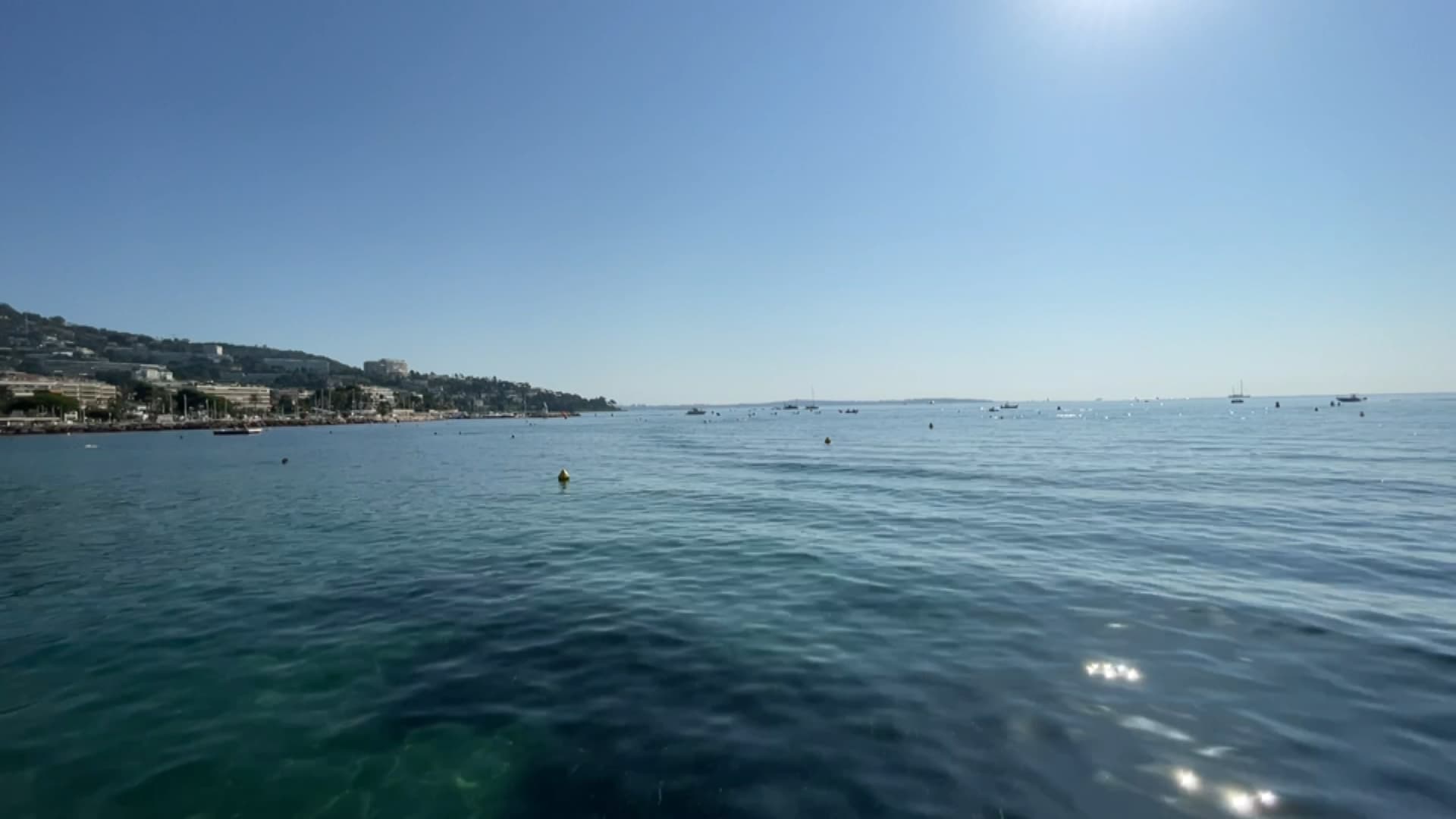
With 28.9°C recorded on Thursday, August 15, the Mediterranean Sea is overheating. These high temperatures are affecting and threatening marine life in the south of France in particular.
The Mediterranean Sea is overheating. On Thursday, August 15, a new water temperature record was recorded at 28.9°C. Up to 30°C were also recorded on the Var coast. The phenomenon can be explained by the high temperatures of recent days, as well as by global warming.
For Gérard Carrodano, a fisherman in La Ciotat, it is difficult to remain indifferent to the high sea temperatures. Commissioned by the Water Agency as a whistleblower, he has been monitoring the evolution of fish for several years.
The fisherman witnessed the consequences of this overheating of the water, particularly on marine species.
“Last week, I was on the boat to pick up something that had fallen into the water, I was devoured by a band of amberjacks. They surrounded me,” he told BFM Marseille Provence.
A “natural” phenomenon
The fisherman further explains that unusual marine species are visible near the coast, including stingrays.
“There are people who report them on the beaches. We see them in the docks in Marseille and La Ciotat, but these are natural phenomena caused by high temperatures,” he adds.
The most harmful effects of the warming of the Mediterranean Sea concern the gorgonians, the stigma of the summer of 2022, particularly in the waters of the Calanques National Park, with a high mortality rate.
Two years later, it is difficult to see them at a depth of less than 30 metres, except to note the necrosis of their corals.
Francesco Carvelli with Mélanie Hennebique


