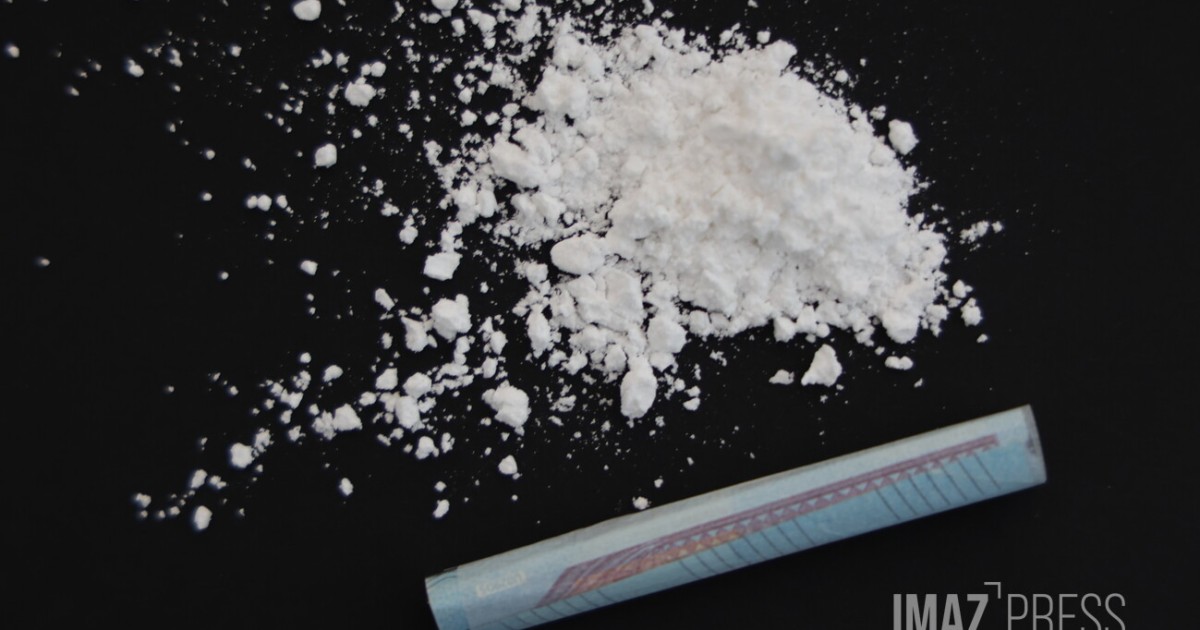
This Thursday, December 12, 2025, the Saint-Denis Court of Appeal examined at length a vast drug case initiated in 2024 in a district of Saint-Louis. Five defendants, convicted at first instance by the Saint-Pierre criminal court last June, are appearing for particularly structured trafficking involving multiple packages, borrowed identities, sophisticated caches, telephone tapping, financial flows and weapons. (Photo www.imazpress.com)
The case started with a first package containing two kilos of cannabis addressed to a woman. On March 4, 2024, customs interviewed him. A few days later, she refused a package intended for her company: 571 grams of cocaine were inside. The next day, another intercepted shipment contained 440 grams of white powder.
The phone number on the packages leads to the company secretary’s son, who used the identity of his mother’s employer to collect the packages. At the same time, Benjamin D., 28 years old, appears connected to Colissimo tracking. During the search of his home, cannabis, cash and above all nearly 100,000 euros in blister packs hidden in a pot were found at his home.
– Powder of exceptional purity –
Quickly, Benjamin D. and the young Théo L. designated the L. brothers and especially Rodrigues T., 25 years old, described as the head of the network. Benjamin D. admits to having kept money “knowing very well where it came from”, in exchange for 400 euros. At the hearing, however, this tall bald and bearded guy, in a tracksuit, no longer recognizes anything: “I didn’t say that.” The president looks up and rereads his hearings word for word. The general counsel becomes impatient: “You were very specific. Today you no longer have any… interesting memories.”
The cocaine intercepted is of exceptional purity: 80%. The total market value of the seized products will ultimately be reassessed at 893,000 euros. Geolocations and telephone tapping confirm the existence of a deal point in the Gare district of Saint-Louis, presumably run by Rodrigues T. and the L brothers. The investigation also reveals relays in mainland France, including an individual traveling back and forth to the Netherlands. In July 2024, Rodrigues T. and Jean-Sébastien L. left several packages in a Paris post office; one contains 95 grams of cathinone which will be intercepted by customs officials.
– Telephone boxes, handguns, a home dedicated to cutting –
The searches reinforce the scale of the network: three handguns and 11,000 euros at Rodrigues T.’s, cash and nine telephone boxes at Jean-Sébastien L.’s, watches and sneakers at Jean-Emmanuel L.’s, packaging material at Thomas P.’s, cannabis and two revolvers at the mother of the L brothers. A Mahorais suspect disappears before his arrest while his home is the central point of the trafficking where investigators find everything that proves it.
At the helm, Rodrigues T., who appealed against a seven-year sentence deemed “too harsh”, explains that he has been living off his savings since 2021 and from “sales of odds and ends”. He travels first class thanks to “a friend”, owns several motorbikes and cars financed, he says, by sports betting. When the president reminds him that several co-defendants named him as boss of the network, he shrugs his shoulders: “They said that to save themselves. I just sell a little. It was my sneakers that were put in the packages, the drugs, it’s not me.” The court leaves an incredulous silence.
– Simple trafficking in counterfeit shoes and bags –
Jean-Sébastien L., 26 years old, dreadlocks, dressed all in white, disputes everything. He admits to having been a money mule but denies any involvement in trafficking. He says he consumes “everything that exists”. The president reminds him that he had broken his phone to avoid its exploitation and that his partner’s phone contains tracking packages involving a kilo of cathinone. Jean-Sébastien replies: “It’s put there to accuse me.” Same refrain for Jean-Emmanuel L., 30 years old, who denies the facts. His lawyer mentions his 80% disability and simple shoe trafficking, his trip to mainland France being a family pilgrimage to Lourdes.
According to the attorney general, this is, however, “well-oiled trafficking”, using false identities, boxes with integrated caches, several telephones, shipments disguised as packages of shoes or luxury bags and trips paid for in cash.
She insists on the continuation of trafficking since detention: phones were found in the cells of Rodrigues T. and Jean-Sébastien L. on October 30, 2024. “The structure never stops. We cut one branch, another grows,” she says, requesting eight years in prison for Rodrigues T., ten years for Jean-Sébastien L., four years including one with probation for Jean-Emmanuel L., and confirmation sentences for Thomas P. and Benjamin D.
Customs are asking that the defendants jointly and severally pay a customs fine of 556,540 euros, a colossal sum which outrages the defense, which wants the sums to be paid to be proportional to the income of any convicted persons.
– The Marseille lawyer deconstructs the accusatory mechanism –
The lawyers, for their part, work to deconstruct the accusatory mechanism point by point. Me Emilie Briard, for Thomas P., recalls that he did not appeal and takes responsibility for his actions; she only asks the court not to increase the customs fine. Me Farid Issé, for Benjamin D., insists on the seizure of the 100,000 euros found in the pot, an already considerable sanction.
Me Gabriel Odier, for Rodrigues T., mentions the absence of a record and a prevention period of only seven months: “Eight years? It’s an elimination sentence. He admitted to selling a little in his neighborhood, nothing more.” He contests any trafficking in custody, speaking instead of “liquidation” of remaining products.
President Georges-André Hoarau recalls that Jean-Emmanuel L. is 80% disabled and cannot be confused with an organized trafficker. Finally, the lawyer from Marseille, Me Ilyacine Maallaoui for Jean-Sébastien L., dismantles the elements of the case one by one: “We are looking for a leader, we are making him. No serious evidence links my client to traffic management. I am asking for his release.”
After more than six hours of hearing, the court deliberated its judgment. The decision will be rendered on January 29, 2026.
is/www.imazpress.com/[email protected]
Justice, Drug trafficking, Saint-Louis, Parcels